
Who Introduced NEET? A Look at the Political Timeline Behind India's Medical Entrance Examination
Chennai Patrika News Desk
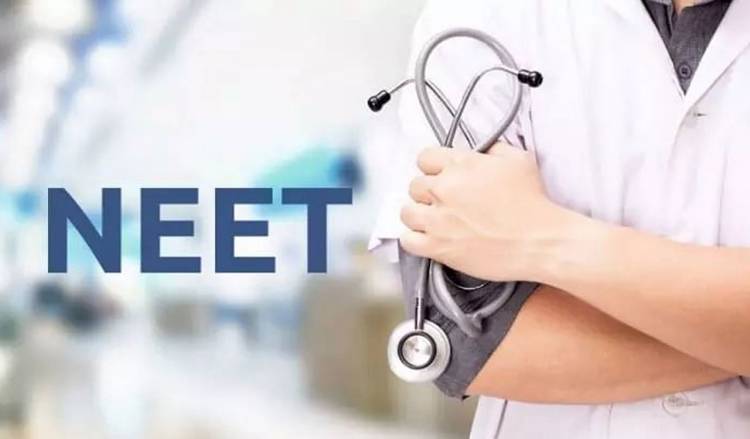
Chennai: The National Eligibility-cum-Entrance Test (NEET) continues to dominate political debates across India, particularly in Tamil Nadu. While the examination has become a major electoral issue, its origins date back more than a decade. A review of publicly available records — including court orders, government notifications and news archives — shows that the proposal, legal journey and nationwide implementation of NEET took place under different governments. Readers are encouraged to verify specific dates and figures against official gazette notifications and Supreme Court records, as secondary reporting on some points varies.
NEET Proposal Originated During UPA-II Government
The proposal for a common national medical entrance examination was initiated in December 2010, when the Medical Council of India (MCI) issued regulations introducing NEET for admissions to MBBS and BDS courses. At the time, India was governed by the United Progressive Alliance (UPA-II) led by Prime Minister Dr. Manmohan Singh.
Major parties supporting the UPA Government at that time included:
Indian National Congress (INC)
Dravida Munnetra Kazhagam (DMK)
Nationalist Congress Party (NCP)
Trinamool Congress (until 2012)
National Conference
Indian Union Muslim League (IUML)
Tamil Nadu Raised Objections in 2010
According to news reports from the period, then Tamil Nadu Chief Minister M. Karunanidhi wrote to the Central Government — reportedly addressed to Prime Minister Manmohan Singh — opposing NEET, stating that it could affect Tamil Nadu's admission policy based on Class XII marks and impact students from rural and economically weaker backgrounds. The exact text of this correspondence has not been independently verified by this desk and readers seeking the primary document should consult official archives.
Legal Challenges Delayed Implementation
Although NEET was proposed in 2010, it did not become immediately operational.
2013: NEET was conducted for the first time (May 5, 2013).
July 2013: The Supreme Court quashed the NEET regulations (July 18, 2013), ruling that the MCI lacked the legislative competence to impose a common entrance test.
April 2016: A Constitution Bench, in a review petition, recalled the earlier judgment on April 11, 2016, reviving the NEET framework.
NDA Government Implemented NEET Nationwide
Following the Supreme Court's decision, the National Democratic Alliance (NDA) Government led by Prime Minister Narendra Modi promulgated the Indian Medical Council (Amendment) Ordinance, 2016 in May 2016, and subsequently secured passage of the corresponding Bill in Parliament by August 2016, inserting Section 10D into the Indian Medical Council Act to give NEET statutory backing.
From the 2016–17 academic year, NEET became the uniform entrance examination for medical admissions across India.
How Have Political Positions Changed?
Note: The characterizations below reflect each party's own publicly stated positions and arguments as reported in the press, rather than independently verified conclusions about NEET's actual effects. Readers should treat these as political claims made by the respective parties.
Bharatiya Janata Party (BJP)
The BJP states that it supports NEET, arguing that it:
Ensures a uniform national standard.
Promotes merit-based admissions.
Reduces multiple entrance examinations.
Improves transparency in admissions.
These are the party's own stated justifications and have not been independently assessed by this desk for accuracy.
Indian National Congress
The Congress was heading the UPA Government when the NEET proposal was introduced. According to party statements and public remarks in recent years, Congress leaders have raised concerns about alleged irregularities in the conduct of NEET and have called for reforms and greater accountability in its administration. Whether this amounts to a consistent national position, and whether it differs from the party's stance in individual states such as Tamil Nadu (where Congress is in alliance with the DMK, which seeks exemption from NEET), is a matter of interpretation and readers should consult the party's official statements and state-unit positions for clarity, rather than treating this summary as a definitive account of Congress policy.
DMK
Although the DMK was part of the UPA coalition when the proposal originated, the party has consistently maintained, in its own public statements, that Tamil Nadu should be exempt from NEET. The DMK argues that the examination disadvantages rural, government-school and State Board students. Successive DMK governments in Tamil Nadu have passed Bills and resolutions seeking exemption, as reported in state assembly records and news coverage.
AIADMK
The AIADMK has also opposed NEET, arguing, per its public statements, that it affects Tamil Nadu students. While in power in the State, it sought exemptions from the Centre and has continued to demand relief for Tamil Nadu, according to statements from party leaders reported in the press.
NEET Timeline
2005–2007 – Tamil Nadu's state-level medical/professional entrance examination (TNPCEE) was phased out over this period: the process began under the AIADMK government's 2005 initiative to scrap the exam, faced legal challenges in the Madras High Court, and was ultimately formalized through legislation (reported as Tamil Nadu Act 3 of 2007) after the DMK government took office in May 2006, shifting admissions to a Class XII marks-based system from the 2007–08 academic year. Readers should note that press accounts differ on whether to credit this shift to 2006 or 2007, and on which government's role was decisive; this account reflects multiple secondary sources but has not been verified against the original legislative text.
December 2010 – Medical Council of India issues NEET notification under the UPA-II Government.
2013 – First NEET examination conducted.
2013 – Supreme Court sets aside NEET.
April 2016 – Supreme Court revives NEET.
May–August 2016 – NDA Government provides statutory backing through Ordinance and legislation.
2016–17 – NEET implemented nationwide.
2017 onwards – Tamil Nadu continues to seek exemption from NEET.
The Political Debate Continues
NEET remains one of India's most debated education policies. Supporters argue that it creates a single national standard for medical admissions, while opponents contend that it places students from rural areas, State Boards and economically weaker backgrounds at a disadvantage, especially in States like Tamil Nadu. These are contested claims made by different political and social actors, and this report does not take a position on which side is factually correct.
The issue continues to be debated in Parliament, State Assemblies and the courts, making NEET both an education policy and a significant political issue.
Editor's note: This article synthesizes information from publicly available news archives, government notifications and court records as understood at the time of writing. Dates, attributions and party positions summarized here should be independently verified against primary sources (official gazettes, Supreme Court judgments, and party statements) before being relied upon for legal, academic or editorial purposes.