
Nepal floods: Death toll nears 400 as hundreds of Indians remain uncontactable
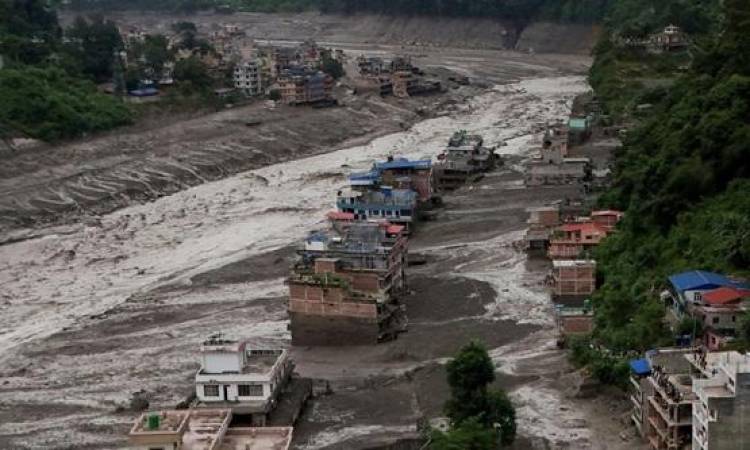
The death toll from the catastrophic flash floods near the Nepal-Tibet border climbed to 392 on Thursday, while rescue teams continued searching for more than 1,400 missing people, including 290 Indian nationals.
Nepal has reported 389 deaths, while three people have died on the Tibet side of the border.
Nepal Police said 796 people, including 50 foreign nationals, had been rescued by helicopter. A further 796 people were evacuated by road and other land routes.
The disaster began after an ice and rock avalanche, believed to have been linked to a glacial collapse, sent huge quantities of water and debris through parts of central Nepal. Towns and villages were inundated, while houses, vehicles, roads and bridges were destroyed or damaged. Several hydropower facilities were also affected.
Authorities remain concerned about the possibility of another flood. A new barrier lake has developed upstream in the Bhote Koshi river system, raising fears that a breach could send another powerful surge downstream.
Experts have warned that the enormous amount of debris blocking the valley could continue to obstruct water flow. The Kathmandu-based International Centre for Integrated Mountain Development has also cautioned about the possibility of a second flood.
Nepal’s Flood Forecasting Division issued a special warning on Thursday over the expanding lake created behind the landslide debris and urged residents and authorities downstream to remain extremely cautious.
Nepal has reported 910 missing people, while officials in Tibet have reported another 558 missing. Together, the number of missing people on both sides of the border stands at 1,468.
India is separately working to establish contact with its citizens caught in the disaster. The Ministry of External Affairs said 290 Indian nationals were still uncontactable.
So far, 84 Indians have been rescued, including 63 employees working at the under-construction Trishuli-I hydroelectric project and 21 pilgrims from Tamil Nadu. The MEA said around 200 Indians on the Tibet side had also sought help to leave the affected region.
External Affairs Minister S Jaishankar reviewed the situation during a meeting that included India’s diplomatic representatives in Kathmandu and Beijing. He said Indian authorities were working with Nepal, other government departments, state administrations, tour operators and local agencies to determine the condition and whereabouts of those still uncontactable.
India has also expanded its humanitarian response. After sending 10 tonnes of disaster-relief supplies to Nepal on Wednesday, another 37.5 tonnes of relief material, medicines and food packets were flown in on Thursday. The total assistance sent so far stands at 47.5 tonnes.
Chinese officials estimate that roughly 2 million cubic metres of water had collected in the newly formed lake by Thursday morning. They warned that another 3 million cubic metres could enter the lake over the following three days, increasing the risk of a breach.
The lake is located near the meeting point of the Chhochen Khola and Purepu Tsangpo rivers, which originate in Tibet before joining the Bhote Koshi river system in Nepal.